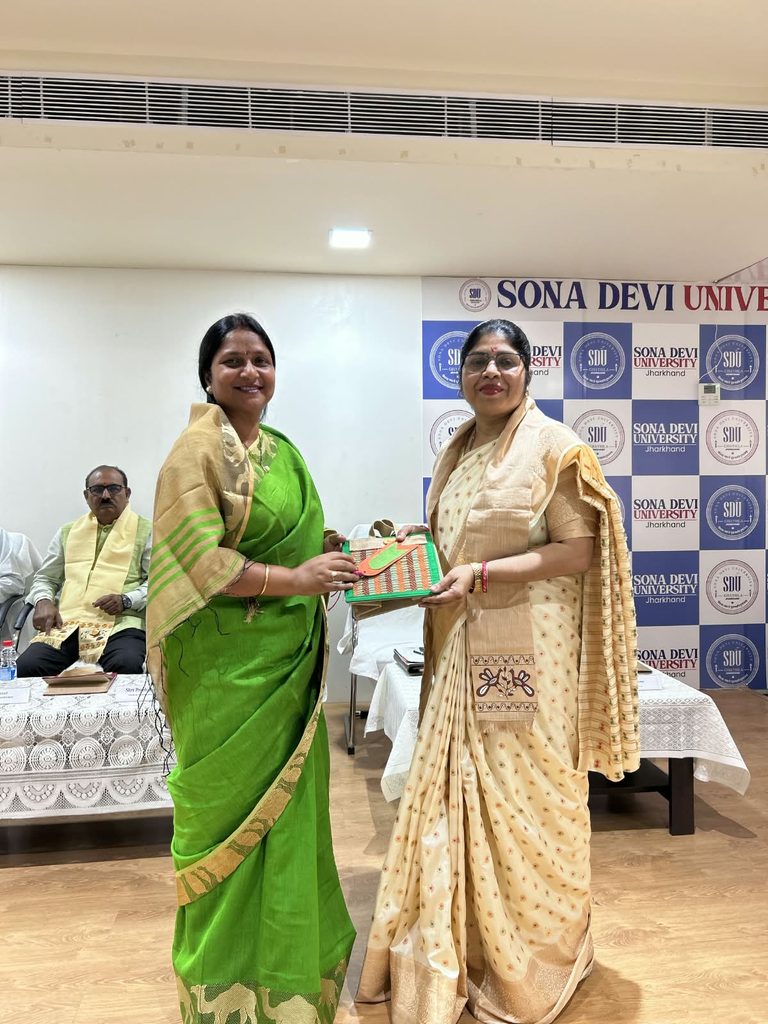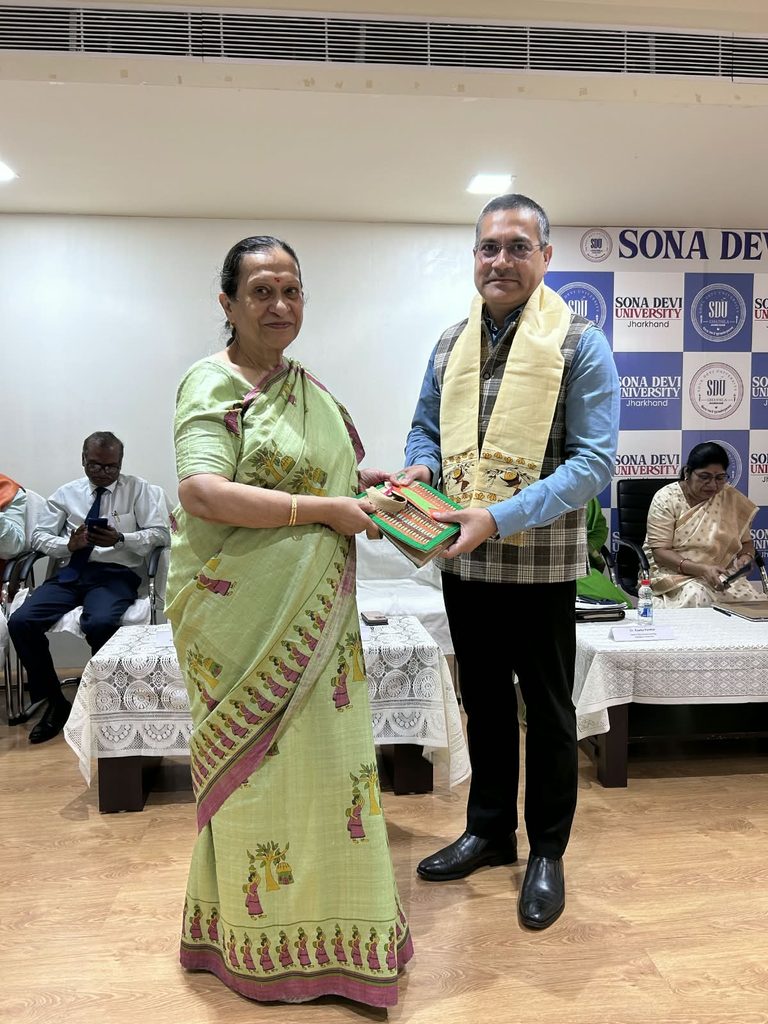
A one-day seminar on ‘Anandamath: A Revisit’ was organised at the Vivekananda Auditorium of Sona Devi University, Ghatsila, jointly by Shiksha Sanskriti Utthan Nyas and Sona Devi University. The seminar witnessed the participation of academicians, literary scholars and distinguished personalities from various educational institutions. During the event, in-depth discussions were held on the literary, historical, cultural and national significance of Bankim Chandra Chattopadhyay’s timeless literary work Anandamath. Speakers emphasised that Anandamath is not merely a novel but a powerful symbol of India’s cultural identity, national pride and spirit of freedom.
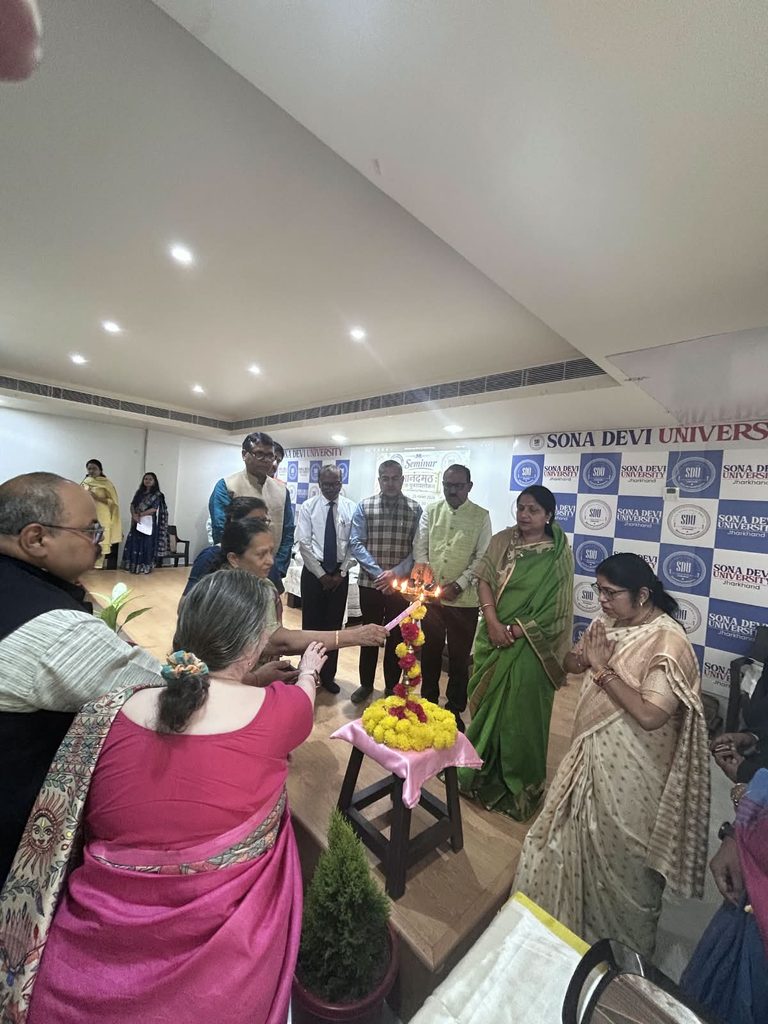
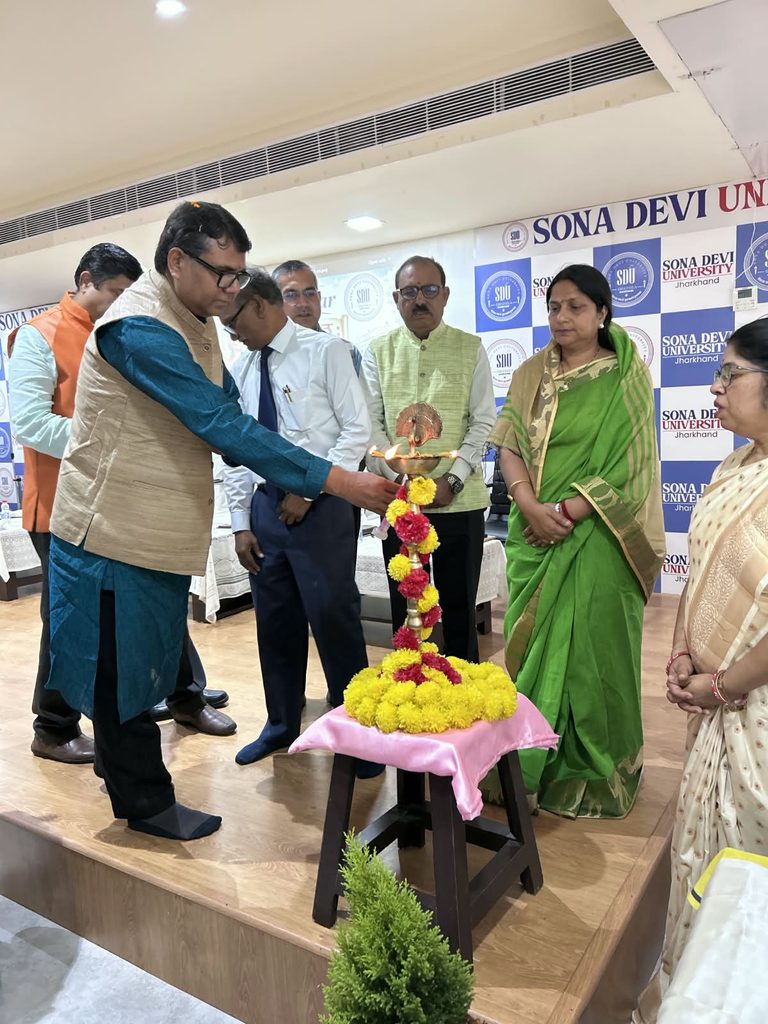
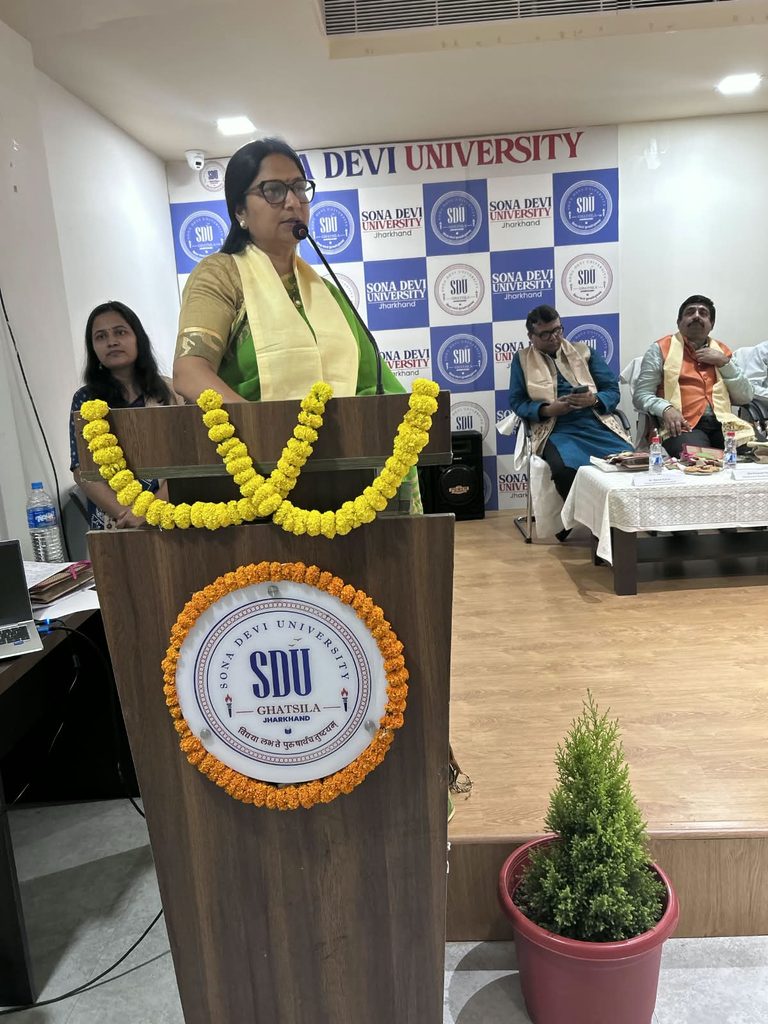
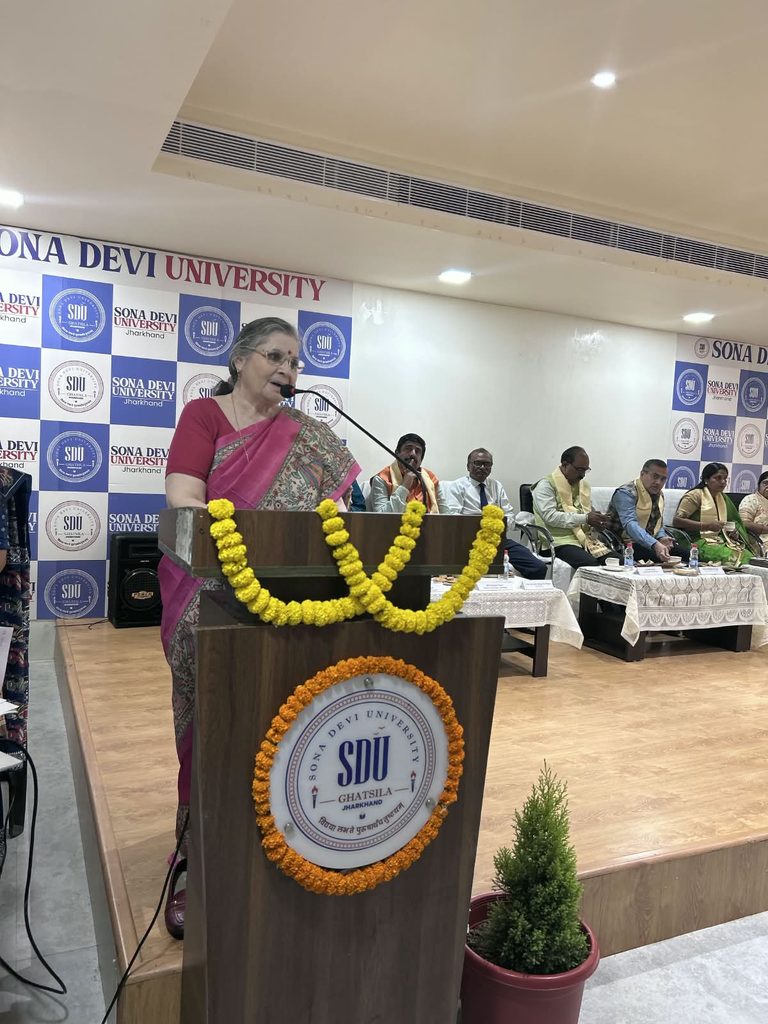
The programme commenced with a rendition of Vande Mataram by Ms. Kumari Nikita, Assistant Professor in the Department of Sanskrit. She also introduced the dignitaries and conducted the proceedings. Subsequently, Dr. Sangeeta Choudhary, Head of the Department of Music, formally inaugurated the programme by lighting the ceremonial lamp. Dr. Ragini Bhushan, former Head of the Department of Sanskrit at Kolhan University, delivered the welcome address, greeted the guests and highlighted the relevance of the seminar. She stated that such events play an important role in connecting the younger generation with Indian literature, culture and traditional knowledge systems.
Highlighting the developmental journey of Shiksha Sanskriti Utthan Nyas, Dr. Kavita Parmar, Co-Regional Convenor (Environmental Education) of the Nyas, explained that the movement was initiated on 2 July 2004 with the objective of bringing positive transformation through education. Initially beginning with six areas of focus, the Nyas has now expanded its activities to several domains, including character building, personality development, Vedic Mathematics, environmental education, technical education, skill development, research, history education and the Indian Knowledge System. She also highlighted the Nyas’s significant contribution to the National Education Policy. Emphasising the importance of educational reform, she stated that if the country is to be transformed, its education system must also be transformed. She further stressed that discussions should not be limited to identifying problems but should also focus on finding practical solutions.
Dr. Nit Nayana, Registrar of Sona Devi University, presented an overview of the university’s growth and achievements. She informed the gathering that the university operates 13 different schools and offers academic programmes recognised by relevant regulatory bodies, including AICTE and PCI. She also highlighted the various Memorandums of Understanding (MoUs) signed with different institutions to promote students’ overall development and create better career opportunities.
The keynote speaker, Dr. Naresh Kumar, Principal of Abdul Bari Memorial College, Jamshedpur, delivered an insightful lecture on ‘Anandamath: A Revisit’. He stated that this timeless literary work by Bankim Chandra Chattopadhyay, published in 1882, connects Indian modernity with its cultural roots. Referring to the historical background of the novel, the Sannyasi Rebellion, the exploitation prevalent during that period and the contemporary social conditions, he highlighted its significant role in shaping national consciousness. He explained that Vande Mataram inspired revolutionaries during India’s freedom struggle with a spirit of sacrifice, dedication and patriotism. Following its rendition at a session of the Indian National Congress, the song gained even greater popularity among the masses. He encouraged students to explore Bankim Chandra’s literary works and read Anandamath in Hindi as well.
The Chief Guest, Shri Prabhakar Singh, Chancellor of Sona Devi University, highlighted the importance of mother, motherland and mother tongue in his address. He stated that national character is shaped by the development of ethical values within families, society and political institutions. He observed that Anandamath inspired revolutionaries during the freedom movement in much the same way as the Bhagavad Gita, instilling in them a deep sense of dedication and commitment towards the nation. He also emphasised the need to give greater importance to the Indian Knowledge System (IKS) in the present education system and to connect young people with Indian culture and national values.
The Vice-Chancellor of the university, Prof. Dr. Braj Mohan Pat Pingua, stated that knowledge, research, literature and cultural discourse are integral components of higher education. He encouraged students to establish their identity at the national level through innovation and research and contribute meaningfully to the development of society.
The distinguished speaker, Dr. Prasannajit Tiwari, Honorary General Secretary of Tulsi Bhawan, Jamshedpur, highlighted the global significance of the Indian Knowledge System. He explained that India’s contributions to the Vedas, Upanishads, Jain, Buddhist and Sikh philosophies, mathematics, governance and Ayurveda have been immensely rich. Referring to Kautilya’s Arthashastra and ancient Indian philosophical thought, he stated that the study and research of India’s traditional knowledge systems could help the country move towards regaining its position as a Vishwaguru (global knowledge leader) by 2047.
Dr. Ranjit Prasad, retired professor of MIT, Jamshedpur, who presided over the seminar, discussed the literary and intellectual relevance of Anandamath. He stated that an individual’s identity is shaped by their thoughts and actions; therefore, every decision should be taken through independent judgement. He emphasised the richness of Indian languages, the promotion of indigenous products and the adoption of the spirit of ‘Vocal for Local’. He also highlighted the importance of the Indian Knowledge System, the Gurukul tradition and the philosophy of universal welfare for society.
At the conclusion of the programme, Shri Narayan Trigun, State Secretary of Shiksha Sanskriti Utthan Nyas and associated with its Competitive Examinations Project, delivered the vote of thanks. He expressed his gratitude to the Chief Guest, keynote speaker, distinguished speakers, academicians, university fraternity and all participants for their valuable presence and contributions.
The event was attended by several distinguished academicians and dignitaries, including Dr. Ranjit Prasad, Shri Prabhakar Singh, Dr. Modita Chandra, Dr. Naresh Kumar, Dr. Ragini Bhushan, Dr. Trigun Narayan, Dr. Nit Nayana, Dr. Kavita Parmar, Dr. Prasannajit Tiwari, Shri Narayan Triveni and Mrs. Manju Singh, among others.
The seminar concluded with a strong message of strengthening national consciousness through literature, culture and the Indian Knowledge System, while encouraging the younger generation to remain connected with India’s rich intellectual and cultural heritage.