Sona Devi University

Beware of fraudulent calls, emails, SMS, WhatsApp, and social media messages claiming direct admission to SONA DEVI UNIVERSITY, GHATSILA. Do not fall for such false claims. Admissions are based strictly on Merit. We do not have any agents or outside representatives. For authentic information, visit our official website: www.sonadeviuniversity.ac.in
Offcanvas
Edit Template

Author name: INS

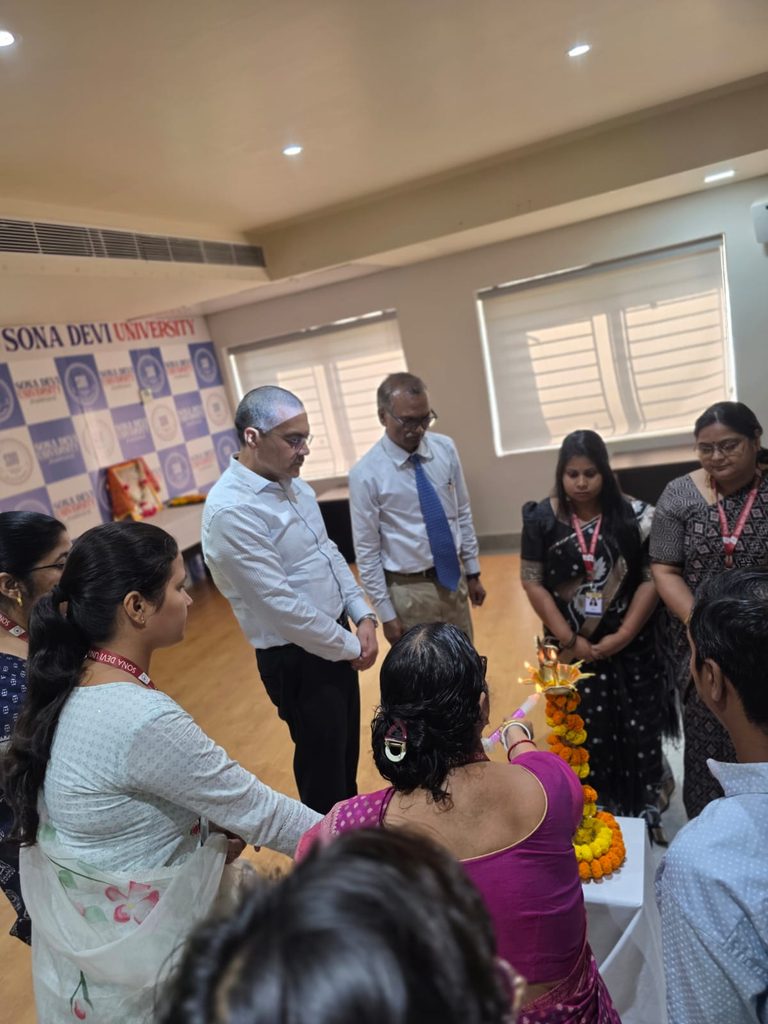
Sonadevi University Celebrates Diwali Mahotsav–2026 with Grandeur, Illuminating the Campus with Festive Lights and Cultural Enthusiasm

Students Showcase Their Talent, Creativity and Entrepreneurial Skills Through Vibrant Activities and Attractive Food Stalls; Chancellor, Vice-Chancellor and Registrar Emphasize the Message of Diwali and the Holistic Development of Students Sonadevi University, Ghatsila, celebrated the auspicious occasion of Diwali with great enthusiasm and excitement through a grand celebration of Diwali Mahotsav–2026. The event transformed the university campus into a vibrant hub of festivities, joy and cultural celebration. The unique blend of traditional Diwali celebrations, modern decorations and enthusiastic student participation created a joyful and captivating atmosphere throughout the campus. The university premises were beautifully decorated with attractive electric lights, colourful decorations, floral garlands and traditional earthen lamps. The illuminated campus and festive arrangements brought alive the true spirit and charm of Diwali. The grand celebration was led by Dr. Priyanjana Banerjee, Head of the Department of Bengali. The event was successfully organised and conducted under the guidance and support of Mrs. Archana Singh, Assistant Registrar of the University. Students, faculty members and staff from various departments participated enthusiastically in the celebration. Together, they transformed the event from a mere cultural programme into a celebration of mutual love, cooperation, unity and collective participation. Students’ Food Stalls Emerge as the Major Attraction of the Festival The variety of attractive food stalls set up by students emerged as one of the major highlights of Diwali Mahotsav. Students formed different groups and demonstrated their culinary skills, creativity, business acumen and entrepreneurial spirit. They independently prepared a variety of delicious dishes and presented them attractively for sale. The food stalls showcased an excellent combination of traditional and contemporary delicacies. The stalls offered a wide range of delicious items, including falooda, pakoras, dahi vada, chicken chilli, pizza, burgers, pancakes with cheese, masala cold drinks, chips, Kurkure, bread pizza, cheesy chips, gupchup, spiral potatoes, crispy potato breadsticks, sandwiches and several other delicacies. Students prepared different dishes using their imagination and culinary skills, which were thoroughly enjoyed by everyone present. The beautifully decorated stalls, enthusiastic presentations and diverse food options added further charm to the festival. Through these food stalls, students not only got an opportunity to showcase their talents but also gained practical experience in teamwork, resource management, product preparation, pricing, customer interaction and sales management. Thus, the activity became an important platform for experiential learning and developing entrepreneurial understanding, alongside entertainment and enjoyment. Registrar Highlights Diwali as a Symbol of Knowledge, Light and Positivity On this occasion, Dr. Nit Nayana, Registrar of the University, shared her message and stated that Diwali is not merely a festival of lighting lamps and celebrating festivities; rather, it symbolises the victory of knowledge over ignorance, light over darkness and positivity over negativity. The festival inspires us to embrace goodwill, love, compassion, cooperation and positive thoughts in our lives. She further emphasised that cultural celebrations in educational institutions hold great significance, as education is not limited to textbook knowledge and academic achievements alone. Equally important is introducing students to their culture, traditions and social values. Such events help develop a sense of mutual cooperation, collective responsibility, discipline and social harmony among students. She appreciated all the students and organisers who participated enthusiastically in the celebration and remarked that their active involvement is the true foundation of the success of any event. Vice-Chancellor Emphasises Holistic Development as the Primary Objective of Education Professor Dr. Braj Mohan Pat Pingua, Vice-Chancellor of the University, stated in his message that the purpose of education is not merely to impart academic knowledge or award degrees to students, but also to ensure their holistic personality development. Along with academics, participation in cultural, social, creative and practical activities strengthens students’ confidence and overall personality. He observed that cultural festivals organised by the university provide an excellent platform for students to showcase their talents and creative abilities. In particular, the initiative of students forming groups, setting up food stalls, preparing different dishes and managing their stalls reflects their efficiency, leadership abilities, teamwork and entrepreneurial mindset. Such activities help students develop the ability to take responsibility, make decisions and work collectively. He further stated that the university strives to ensure that every student understands the practical aspects of life alongside academic learning and develops into a responsible, self-reliant and sensitive citizen in the future. Such celebrations play a significant role in nurturing the hidden talents of students and guiding them towards a positive direction. Chancellor Conveys the Message of Unity, Brotherhood and Preservation of Indian Culture Mr. Prabhakar Singh, Chancellor of the University, shared an inspiring message, stating that the auspicious festival of Diwali conveys the values of unity, love, brotherhood, harmony and humanity. The light of the lamps inspires us to eliminate the darkness of ignorance, despair and negativity from our lives and spread the light of knowledge, hope and positivity. He emphasised that a university is not merely an institution providing higher education but also an important centre for nurturing values, culture, ethics and personality development. Students should develop respect for Indian culture and its glorious traditions alongside their academic pursuits, while remaining conscious of their social responsibilities. He encouraged students to recognise their talents, continue striving for excellence, become self-reliant and contribute positively to the development of society and the nation. He also highlighted that such cultural celebrations bring all members of the university community together on a common platform and strengthen feelings of belongingness, mutual trust, harmony and collective participation. These events not only keep our cultural heritage alive but also serve as an effective means of connecting the younger generation with its traditions. Festival Becomes a Beautiful Blend of Indian Culture, Traditions and Creativity The primary objective of Diwali Mahotsav–2026 was to connect students with Indian culture and traditions, develop cultural awareness and encourage creativity, cooperation, leadership qualities and social harmony. The celebration conveyed the message that the true purpose of education is fulfilled only when academic knowledge is accompanied by the development of ethical values, cultural understanding, social responsibility and practical skills among students. The festival provided students with an opportunity to showcase

Sonadevi University Celebrates Diwali Mahotsav–2026 with Grandeur, Illuminating the Campus with Festive Lights and Cultural Enthusiasm Read More »

Sona Devi University Celebrates the 151st Birth Anniversary of Sardar Vallabhbhai Patel with a Message of National Unity

Call to Strengthen National Unity and Integrity and Build a Developed India @2047 with the Vision of ‘Ek Bharat, Shreshtha Bharat’ Sona Devi University, Ghatsila, celebrated National Unity Day with great patriotic fervour, a spirit of social harmony and national pride on the occasion of the 151st birth anniversary of the Iron Man of India, Sardar Vallabhbhai Patel. The occasion reaffirmed the commitment towards national unity and integrity and called for realising the vision of ‘Ek Bharat, Shreshtha Bharat’, ‘Strong India, Prosperous India’ and ‘Developed India @2047’. The programme paid tribute to Sardar Patel’s extraordinary leadership, strong determination and historic contribution to the integration of princely states into independent India. Vice-Chancellor Highlights National Unity as India’s Greatest Strength Addressing the gathering, the Vice-Chancellor of the University, Prof. (Dr.) Braj Mohan Pat Pingua, stated that Sardar Vallabhbhai Patel was a great nation-builder who played a decisive role in uniting the princely states of independent India through his vision, unwavering determination and exceptional leadership abilities. His life continues to inspire generations through his dedication to the nation, courage and sense of duty. He stated that ‘Ek Bharat, Shreshtha Bharat’ is not merely a slogan but a symbol of India’s rich cultural heritage and national integration. India’s linguistic, cultural, religious and social diversity is not its weakness but its greatest strength. He appealed to everyone to rise above discrimination and narrow-mindedness and strengthen mutual trust, brotherhood and social harmony. Addressing the students, the Vice-Chancellor said that young people are the architects of the nation’s future. The purpose of education is not limited to obtaining degrees; it must also promote character building, morality, discipline, scientific temper and a sense of social responsibility. He encouraged students to contribute to national progress through research, innovation and skill development. Dr. Shiv Chandra Jha Describes National Unity as the Foundation of Nation-Building Dr. Shiv Chandra Jha, Head of the Department of Political Science, stated that Sardar Vallabhbhai Patel’s personality represents an extraordinary example of national unity, strong leadership and dedicated service to the nation. Through the integration of princely states, he laid a strong foundation for India’s national integrity. His life conveys the values of collective determination, mutual trust, sacrifice and unwavering commitment to the nation. Dr. Jha emphasised that national unity is not merely a pledge to be expressed on a particular day but a fundamental value that must be reflected in every citizen’s thoughts, behaviour and responsibilities. Respect for constitutional ideals, commitment to democratic values, social justice and equal respect for all communities are essential to strengthening national unity. He further stated that universities are not merely institutions imparting knowledge but centres that shape the intellectual, moral and social future of the nation. Students should contribute to resolving societal challenges through research, innovation and public welfare initiatives. Registrar Dr. Nit Nayana Emphasises Social Harmony and Civic Responsibilities Registrar Dr. Nit Nayana stated that national unity is the fundamental foundation of a country’s stability, progress and prosperity. India’s diverse culture teaches us to respect one another’s languages, traditions and perspectives. The true strength of a nation develops when its citizens remain conscious of their responsibilities along with their rights. She emphasised that the purpose of education is not only to make students knowledgeable but also to develop moral values, discipline, human sensitivity and democratic awareness among them. Knowledge combined with wisdom, and rights accompanied by a sense of responsibility, form the foundation of a strong society. Chancellor Mr. Prabhakar Singh Delivers the Message of ‘Nation First’ In his inspiring message, the University’s Chancellor, Mr. Prabhakar Singh, stated that Sardar Vallabhbhai Patel’s life symbolises unwavering dedication to the nation, courage, discipline and strong determination. Through his vision and historic leadership, he demonstrated that national unity is the greatest strength of any nation. Mr. Singh said that ‘Nation First, Nation Above All’ should be the guiding principle in every citizen’s life. To transform India into a developed, prosperous and self-reliant nation, it is essential to promote quality education, skill development, women’s empowerment, scientific thinking, research, innovation and social harmony. He further stated that the vision of Developed India @2047 is not the responsibility of the government or any single institution alone but a collective commitment of every citizen. The knowledge, character, hard work and dedication of today’s students towards the nation will lay the foundation for India’s bright future. Dr. Priyanjana Banerjee Conducts the Programme and Highlights Cultural Unity The programme was effectively conducted by Dr. Priyanjana Banerjee, Head of the Department of Bengali. She stated that India’s true identity lies in its cultural diversity and the national integration that binds this diversity together. The ideals of Sardar Patel inspire us to build a strong nation through mutual respect, tolerance, brotherhood and collective responsibility. She emphasised that although India has numerous languages and diverse cultures, the spirit of Indianness unites everyone. Highlighting education and cultural activities as important mediums for developing national consciousness, she encouraged students to demonstrate respect and sensitivity towards other cultures. Pledge for National Unity and Commitment to Service to the Nation During the programme, Assistant Registrar Mrs. Archana Singh administered the National Unity Pledge to the participants. Everyone pledged to preserve the unity, integrity and security of the nation and strengthen the spirit of harmony, brotherhood and national integration among fellow citizens. The programme also highlighted Sona Devi University’s commitment to developing national consciousness, democratic values and social harmony among students through quality education, research, innovation and social responsibility. The university aims to nurture young individuals who possess not only knowledge and skills but also strong moral values, human sensitivity and a deep sense of dedication towards the nation. The central message of the programme was that India’s diversity is its identity, unity is its strength, and social harmony is its driving force. By embracing the ideals of Sardar Vallabhbhai Patel and sincerely fulfilling our civic responsibilities, we can collectively realise the dream of a strong, prosperous, self-reliant and developed India. Ek Bharat, Shreshtha Bharat! Strong India, Prosperous India!

Sona Devi University Celebrates the 151st Birth Anniversary of Sardar Vallabhbhai Patel with a Message of National Unity Read More »

Grand Conclusion of Two-Day National Seminar at Sona Devi University

In-Depth Academic Deliberations on the Indian Knowledge System and Contemporary Global Scenario; Commitment to Promoting Research and Innovation Ghatsila: The two-day National Seminar on “Contemporary Global Scenario and Indian Knowledge System: An Analytical Discourse”, organised at Sona Devi University, Ghatsila, concluded successfully. The event witnessed the participation of academicians, experts, research scholars and students from various educational institutions across the country, who engaged in meaningful discussions on the rich heritage of the Indian Knowledge System and its relevance in the contemporary global scenario. On the occasion, Registrar Dr. Nit Nayana stated that the university is committed to providing students and research scholars with an effective platform for knowledge sharing, research and the exchange of ideas. She further highlighted that new opportunities are being created for students’ bright futures through collaborations with various academic institutions and modern technological initiatives. Vice-Chancellor Prof. (Dr.) Braj Mohan Pat Pingua emphasised the importance of encouraging the Indian knowledge tradition, research and innovation in the face of global challenges such as climate change and technological advancements. He urged research scholars to undertake original and innovative research, stating that the research contributions of young minds would form a strong foundation for an innovative and developed India. Chancellor Mr. Prabhakar Singh, while inspiring the participants, stated that the Indian Knowledge System represents our rich cultural and intellectual heritage. He emphasised the need to integrate this heritage with modern education and research and pass it on to the next generation. He encouraged young people to embrace India’s knowledge traditions and contribute towards building a developed and prosperous India. During the seminar, various academic and technical sessions featured in-depth discussions on Indian philosophy, the Vedas, Upanishads, the Shrimad Bhagavad Gita, ancient Indian science, modern technology, research and innovation. The speakers emphasised the importance of integrating the Indian Knowledge System with modern science and higher education, while fostering scientific temper and original thinking among students. The event provided a valuable opportunity for more than 200 teachers, research scholars and students to present and share their ideas and research findings. At the conclusion, the organising committee expressed its heartfelt gratitude to all the dignitaries, speakers, participants and supporting members for their valuable contributions and cooperation. With a renewed commitment to preserving and promoting India’s knowledge traditions and integrating them with modern education and research, the two-day National Seminar concluded successfully. The event proved to be a significant academic initiative by Sona Devi University towards building a developed and prosperous India through research, innovation and quality higher education.

Grand Conclusion of Two-Day National Seminar at Sona Devi University Read More »

Two-Day National Seminar Successfully Organized at Sona Devi University

Scholars Engage in In-Depth Academic Deliberations on ‘Contemporary Global Scenario and Indian Knowledge System’ Ghatsila, Jharkhand: Sona Devi University, Ghatsila, successfully organized a two-day National Seminar on the theme “Contemporary Global Scenario and Indian Knowledge System: An Analytical Discourse.” The primary objective of the seminar was to deliberate on the relevance of the Indian Knowledge System (IKS) in the contemporary global scenario, India’s rich intellectual and cultural heritage, and its role in modern education, science, research, and society. The programme was organized at the Swami Vivekananda Auditorium of the University. The inaugural session was conducted by Ms. Kumari Nikita, Assistant Professor, Department of Sanskrit. The programme commenced with the chanting of Vedic mantras by Dr. Sangeeta Chowdhury, Assistant Professor and Head of the Department of Music. This was followed by a welcome address and felicitation of the guests by Mrs. Archana Singh, Assistant Registrar. The inaugural session was graced by the presence of the University’s Chancellor, Mr. Prabhakar Singh; Vice-Chancellor, Prof. (Dr.) Braj Mohan Pat Pingua; Registrar and Dean of the Faculty of Science, Dr. Nit Nayana; Director of the National Institute of Technology (NIT), Jamshedpur, Prof. (Dr.) Gautam Sutradhar; and the Hon’ble MLA of Jamshedpur West and Chairman of the Committee on Delegated Legislation of the Jharkhand Legislative Assembly, Mr. Saryu Roy, along with other distinguished guests from academic and administrative fields. Call to Promote Research, Innovation and Indian Knowledge Traditions Formally inaugurating the seminar, Vice-Chancellor Prof. (Dr.) Braj Mohan Pat Pingua emphasized the need to promote Indian knowledge traditions in the face of contemporary global challenges such as climate change, technological advancement, and innovation. He encouraged research scholars to undertake original and innovative research, stating that today’s research would lay the foundation for an innovative India. He also motivated scholars to bring their ideas before society through academic writing and research. Presenting a report on the University’s academic and institutional activities, Registrar Dr. Nit Nayana stated that the University provides a meaningful platform for teachers, research scholars, and students to exchange ideas and perspectives. She highlighted the University’s academic environment, activities undertaken by various departments, and initiatives in emerging academic fields, including Artificial Intelligence (AI). She further informed the gathering that collaborations with various academic institutions and organizations through Memorandums of Understanding (MoUs) are creating new opportunities for students. These initiatives are expected to contribute to skill development, a brighter future for students, and the vision of building a developed and prosperous India. Dr. Sujit Kumar, Head of the Department of Sanskrit, delivered the introductory address, highlighting the academic significance of the seminar’s theme. He emphasized the various dimensions of the Indian Knowledge System and the importance of studying its relevance in the present era. Indian Knowledge Traditions as the Foundation of Modern Science and Management During the inaugural session, Dr. Monika Uppal, Principal of DBMS College of Education, stated that Indian knowledge traditions have influenced various fields, including science, management, leadership, and global thought. She emphasized that the knowledge contained in the Vedas and ancient Indian scriptures should be studied in conjunction with modern scientific perspectives. She particularly highlighted the management and leadership principles of Kautilya and the teachings of the Shrimad Bhagavad Gita, explaining how traditional knowledge can offer solutions to contemporary challenges. She also stressed the need for analytical studies of contemporary global issues and encouraged further research in this direction. Prof. (Dr.) Gautam Sutradhar, Director of NIT Jamshedpur, highlighted the relationship between the Indian Knowledge System and modern science and technology. He encouraged research scholars to pursue research and innovation in areas such as robotics, emerging technologies, greenhouse technology, and other scientific disciplines by exploring their connections with Indian knowledge traditions. He observed that the Indian Knowledge System contains numerous elements of scientific and technological significance that require systematic academic and research-based exploration. Referring to Vedic chanting, astronomy, traditional concepts related to the Sun and Moon, and various aspects of ancient Indian technological knowledge, he emphasized the importance of examining these subjects in contemporary scientific contexts. Integrating the Indian Knowledge System into Education Is an Important Initiative: Chancellor Addressing the gathering, University Chancellor Mr. Prabhakar Singh shared his views on the historical significance of the Indian Knowledge System and its growing relevance in the present academic landscape. He stated that India has been a land of rich traditions in knowledge, science, and culture since ancient times. Referring to the impact of colonial rule on Indian civilization, culture, and traditional education systems, he emphasized the need to bring Indian knowledge traditions back to the centre of academic discourse. He welcomed the initiative to incorporate the Indian Knowledge System into universities and higher education institutions and expressed his appreciation for the efforts of the Prime Minister in this direction. He expressed confidence that the Indian Knowledge System would play a significant role in realizing the vision of a developed India by the centenary of independence. He also highlighted the commitment to the development and prosperity of Jharkhand. Through his poetic reflections, he conveyed messages of social awareness, creativity, and freedom of thought. Solutions to Life’s and the World’s Challenges Lie in Indian Knowledge Traditions Dr. Ragini Bhushan, former Head of the Department of Sanskrit, Kolhan University, highlighted the deep connection between Indian knowledge traditions and contemporary challenges. Referring to the vast knowledge contained in the Vedas and Upanishads, she observed that an in-depth study of ancient Indian scriptures can provide society with fresh perspectives on several important issues. The Hon’ble MLA of Jamshedpur West and Chairman of the Committee on Delegated Legislation of the Jharkhand Legislative Assembly, Mr. Saryu Roy, delivered an elaborate address explaining the distinction between synthesis and analysis in understanding the Indian Knowledge System. He stated that a comprehensive understanding of Indian knowledge traditions requires an in-depth study of their fundamental ideas, philosophy, and broader contexts. He shared his perspectives on the Indian philosophical concept of 84 lakh life forms, the philosophy of Adi Shankaracharya, the concept of zero, and the interrelationship between Indian and global knowledge traditions. Referring to Swami Vivekananda

Two-Day National Seminar Successfully Organized at Sona Devi University Read More »

Registrar of Sona Devi University, Dr. Nit Nayana, Participates in Industry–Academia Conclave 2026

Jamshedpur, October 29, 2026: Dr. Nit Nayana, Registrar of Sona Devi University, participated in the Industry–Academia Conclave 2026, organised by the Research and Consultancy Division of the National Institute of Technology (NIT), Jamshedpur, on October 29, 2026. The event provided a platform for discussions on strengthening coordination between industries and academic institutions, promoting research and innovation, and aligning higher education with the evolving needs of the industrial sector. The primary objective of the conclave was to encourage collaboration among industries, academic institutions, research organisations, Micro, Small and Medium Enterprises (MSMEs), and startups. It also focused on exploring new opportunities in advanced technology, research, skill development, and innovation. Key topics discussed during the programme included developing academic curricula in accordance with industry requirements, expanding shared research facilities, fostering technical collaboration to address industrial challenges, and nurturing an entrepreneurial mindset among young people. The importance of providing startups with proper mentorship, institutional support, and access to financial resources was also emphasised. Dr. Nit Nayana’s participation is regarded as an important step towards strengthening potential collaborations between Sona Devi University and the industrial sector. Her participation is expected to open new avenues for promoting research-oriented education, enhancing students’ practical knowledge and skill development, and expanding employment-oriented opportunities for students. Participation in such academic and industrial events provides universities with valuable opportunities to understand the changing requirements of the industrial sector and develop effective partnerships in education, research, and innovation. Sona Devi University remains committed to promoting quality education, research, innovation, and meaningful partnerships with industries. The university aims to equip students with modern knowledge, practical skills, and better opportunities, thereby contributing to building a bright and successful future for them.

Registrar of Sona Devi University, Dr. Nit Nayana, Participates in Industry–Academia Conclave 2026 Read More »

National Service Scheme (NSS) Organises Vigilance Awareness Campaign in Kitadih Village, Ghatsila

Calls for Building a Corruption-Free Society with the Message “Prosperity Through Integrity” Kitadih Village, Ghatsila: The National Service Scheme (NSS) organised a Vigilance Awareness Campaign in Kitadih Village, Ghatsila, under the theme “Prosperity Through Integrity.” The primary objective of the campaign was to sensitise the rural community to the values of integrity, honesty, transparency, ethics and social responsibility, and to inspire people to contribute towards building a corruption-free society. Through this initiative, villagers were reminded that the true prosperity of a nation depends not only on economic development but also on the ethical conduct, honesty and sense of duty of its citizens. The programme was organised under the leadership of Dr. Priyanjana Banerjee, Head of the Department of Bengali. The campaign placed special emphasis on promoting ethical values, developing civic awareness and fostering collective awareness against corruption. During the programme, villagers were informed that corruption is not merely an administrative or economic problem; it also undermines social trust, equal opportunities, justice and the overall development process. Therefore, every citizen must be aware, responsible and ethical to help eliminate corruption. On this occasion, Dr. Shiv Chandra Jha, NSS Programme Officer and Head of the Department of Political Science, shared his views and stated that integrity, honesty and transparency are the fundamental pillars of any democratic and developed society. He emphasised that building a corruption-free society is not possible through laws and administrative mechanisms alone; it also requires positive changes in citizens’ attitudes, thinking and working practices. Every individual should uphold ethical values in their personal, social and professional lives. He further explained that when citizens are aware of their rights and perform their duties honestly, accountability, transparency and a sense of justice become stronger within society. He stressed that spreading awareness against corruption and fostering ethical consciousness among the younger generation are important needs of the present time. Mr. Kundan Ranjan Tiwari, Assistant Professor in the Department of Commerce and Management, also highlighted the objectives of the campaign and emphasised the importance of honesty, ethical conduct and transparency. He underlined the need to practise integrity in everyday life and in the workplace. He pointed out that even small acts of honesty by individuals can play a significant role in bringing positive changes to society. If every citizen acts fairly, refrains from seeking undue benefits and fulfils their responsibilities with sincerity, corrupt practices can be effectively curbed. Incorporating ethical values into everyday behaviour is the hallmark of a responsible, sensitive and empowered society. During the campaign, villagers were made aware of the various adverse consequences of corruption. They were informed that corruption can create obstacles in delivering the benefits of development schemes to those in need, encourage the misuse of public resources, and lead to inequality and distrust within society. In contrast, a system based on transparency, accountability and honesty can ensure that public welfare initiatives are implemented more effectively. Villagers were encouraged to speak the truth, prioritise lawful and ethical actions, follow rules and refrain from seeking undue benefits or engaging in unethical practices in their daily lives. The NSS volunteers played an important role in the campaign by spreading the message of integrity and honesty among the rural community. They emphasised that awareness against corruption should not be limited to a single day or programme but should become an integral part of everyday life and social behaviour. Every individual should take initiatives at their own level to promote honesty, fairness and transparency. Highlighting the importance of young people, the campaign conveyed that the younger generation can contribute to building a better and corruption-free future through their conduct, ideas and active participation in society. The programme also highlighted the importance of civic responsibility and community participation. Villagers were encouraged to remain vigilant in matters concerning public welfare, understand their rights and duties, and actively promote ethical values within society. It was further emphasised that coordination among families, educational institutions, social organisations and local communities is essential for establishing a corruption-free system. When all sections of society prioritise honesty and accountability, the path towards a clean, fair and responsible social system becomes stronger. The central message of the programme was that “Prosperity Through Integrity” is not merely a slogan but an important principle to be practised in everyday life. Honesty strengthens individual character, transparency builds social trust, and ethical conduct guides society in the right direction. By embracing these values, the nation can work towards sustainable development, social justice and public welfare. Building a corruption-free society is not solely the responsibility of the government, administration or any single institution; it is a shared responsibility of every citizen. The programme was coordinated by Ms. Patatri Mali, NSS Nodal Officer and Assistant Professor in the Department of Agricultural Science. Under her coordination, the campaign sought to promote ethical values in rural areas and strengthen public awareness against corruption. This initiative by the National Service Scheme represents an important step towards promoting social awareness, ethical education and civic responsibility. Such programmes can strengthen the rural community’s understanding of honesty, transparency and integrity while fostering a deeper sense of responsibility towards society. The campaign concluded with the broader message that every citizen can contribute to building a corruption-free, just and prosperous nation by embracing ethical values and fulfilling their duties with sincerity and dedication.

National Service Scheme (NSS) Organises Vigilance Awareness Campaign in Kitadih Village, Ghatsila Read More »

SDU School of Pharmacy Organises Campus-Wide Cleanliness and Hygiene Awareness Drive

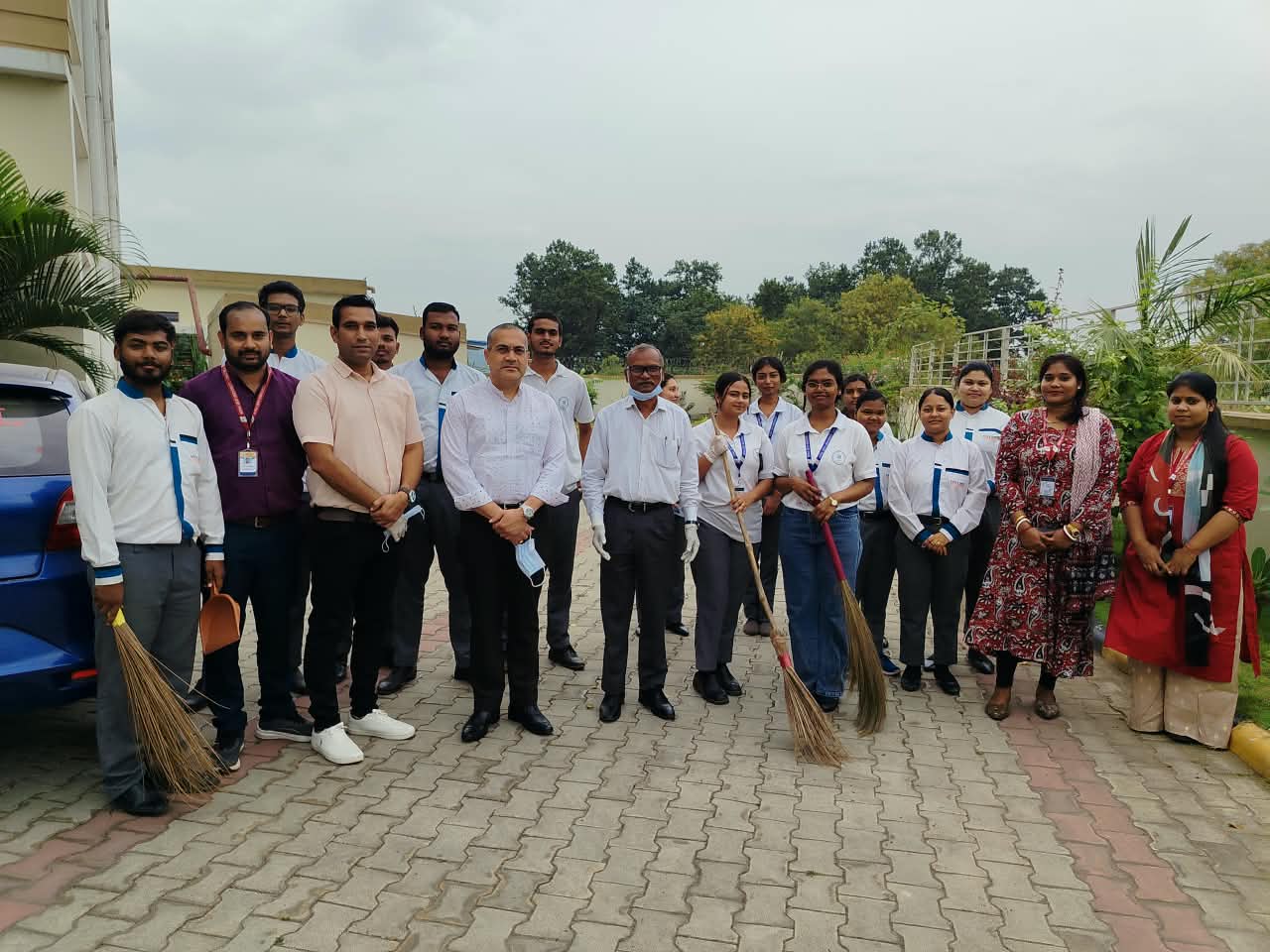
All D.Pharm and B.Pharm students join faculty and staff to promote cleanliness, hygiene and shared responsibility. SDU School of Pharmacy organised a one-day sanitation and hygiene campaign under “Kayakalp Activities (Sanitation and Hygiene)”, as part of the Pharmacy Council of India’s (PCI) Special Campaign 6 on Tuesday, 27 October 2026. The initiative brought together students, faculty members and institutional leadership to strengthen awareness of cleanliness and healthy practices across the campus. All D.Pharm and B.Pharm students actively participated in the campaign. Through their involvement, students reinforced the message that maintaining a clean campus is a shared responsibility, requiring everyday efforts such as keeping classrooms and common areas tidy, practising personal hygiene and encouraging others to follow the same habits. The campaign was attended by Hon’ble Chancellor Mr. Prabhakar Singh, who shared valuable messages with the students. He emphasised that cleanliness reflects respect for the institution and for one another, and that lasting change begins when every member of the campus takes responsibility. Vice-Chancellor Professor Dr. Braj Mohan Pat Pingua encouraged students to make hygiene a regular habit, look beyond one-day activities and contribute towards building a culture of collective responsibility for a clean and healthy environment. Principal Mr. Sudhanshu Shandilya highlighted the close connection between sanitation, health and the quality of the learning environment. He urged students to put their awareness into practice, take initiative in keeping the campus clean and encourage their peers to adopt responsible hygiene habits. The campaign was supported by the active participation of Mrs. Harsha Verma, Assistant Professor; Mr. Kishor Kumar Mahakur, Assistant Professor; Ms. Uma Mahato, Assistant Professor; and Mr. Pratik Tiwari, Laboratory Assistant. They highlighted practical, everyday ways to support the initiative, including maintaining orderly classrooms and laboratory spaces, using campus facilities responsibly, avoiding littering and reminding one another that cleanliness requires everyone’s participation. The campaign served as a reminder that sanitation is not a one-day activity but an ongoing commitment. By involving students from both pharmacy programmes and bringing together the institution’s leadership, faculty and staff, SDU School of Pharmacy reaffirmed its commitment to maintaining a cleaner, safer and healthier campus and transforming awareness into meaningful action.

SDU School of Pharmacy Organises Campus-Wide Cleanliness and Hygiene Awareness Drive Read More »

Awareness, Vigilance and Digital Literacy Are Essential to Prevent Cybercrime: Sonadevi University Participates in UGC’s ‘Chetna Series Lecture’

With the rapid expansion of digital technology and the growing challenges posed by cybercrime, awareness of safe online practices, digital literacy and cybersecurity has become an urgent necessity. With this objective, the University Grants Commission (UGC) organised an online lecture under its Chetna Series Lecture initiative on the occasion of National Cybersecurity Awareness Month (October 2026). The lecture was titled “Cybercrime Uncovered: Threats, Prevention & Response.” Dr. Nit Nayana, Registrar of Sonadevi University, participated in the programme and highlighted the importance of cybersecurity awareness and responsible digital citizenship. The objective of this UGC initiative was to raise awareness about various forms of cybercrime, the risks associated with them, effective preventive measures and timely action in the event of a cybercrime incident. Mr. Nishant Kumar, Director of the Indian Cyber Crime Coordination Centre (I4C), Ministry of Home Affairs, Government of India, was scheduled to speak at the lecture. The programme placed particular emphasis on the safe use of digital platforms, identifying online fraud and adopting practical measures to prevent cybercrime. On this occasion, Dr. Nit Nayana, Registrar of the university, stated that cybersecurity has become an integral part of everyone’s life in the present digital age. The internet, digital payments, online banking and social media have made life more convenient; however, their increasing use has also led to growing cybercrime risks. Therefore, every citizen must remain vigilant while engaging in online activities, avoid unfamiliar links and suspicious messages, and protect the confidentiality of personal and financial information. She further emphasised that cybersecurity awareness is not limited to technical knowledge but is also closely connected with responsible digital behaviour and personal safety. Such awareness programmes play an important role in enabling students and the general public to identify potential threats and take appropriate preventive measures. The Vice-Chancellor of the university, Professor Dr. Braj Mohan Pat Pingua, stated that the purpose of modern education is not merely to impart academic knowledge but also to prepare students to understand, address and respond responsibly to the challenges of a rapidly changing technological environment. In the digital world, staying safe online, verifying the authenticity of information and using technology judiciously are essential skills for every student. He emphasised that educational institutions have a responsibility to foster logical and critical thinking, safe online practices and a culture of responsible digital usage among students. Young people who are aware of cybersecurity risks can protect themselves from digital threats and spread positive awareness throughout society. Encouraging students to remain vigilant, Professor Pingua stated that digital technology is an important force in modern life, but its true benefits can be realised only when it is used with wisdom, caution and responsibility. Cybercriminals employ various methods to mislead people, including fraudulent investment schemes, attractive but deceptive online offers, misleading messages and the misuse of digital identities. Therefore, students and young people must verify the authenticity of any online offer before trusting it or sharing their personal information. Awareness and vigilance are the first and most important lines of defence against cybercrime. Professor Pingua further stated that cybersecurity is not the responsibility of any single individual, educational institution or government agency; rather, it is a shared responsibility of society as a whole. Discussion on Emerging Forms of Cybercrime and Effective Preventive Measures During the lecture, detailed information was shared about the evolving nature of cybercrime and the challenges associated with it. Important topics included investment fraud through social media, fake online booking and e-commerce scams, misuse of identities and images through deepfake technology, and cyber fraud carried out through suspicious Android Package Kit (APK) applications. The programme also provided information about official channels available for reporting cybercrime and seeking assistance. These included the Indian Cyber Crime Coordination Centre (I4C), the National Cyber Crime Reporting Portal, the cybercrime helpline 1930, and Cyber Dost, a cybersecurity awareness initiative. Through these initiatives, emphasis was placed on educating citizens about reporting cybercrime, preventing online financial fraud and adopting safe digital practices. The key message of the lecture was that technical knowledge alone is not sufficient to prevent cybercrime. Vigilance, informed decision-making, protection of personal information and timely reporting of suspicious activities are equally important. In particular, prompt action is crucial in cases of online financial fraud. Sonadevi University Committed to Building a Safe and Digitally Aware Society Sonadevi University is committed to promoting cybersecurity awareness, digital literacy and responsible digital citizenship among students, teachers and the wider community. The university believes that, alongside academic education, familiarising students with the opportunities, challenges and security responsibilities of the digital world is an essential requirement of the present time. Initiatives such as the UGC’s Chetna Series Lecture play a significant role in raising awareness about cybercrime, encouraging safe online practices and fostering responsible use of digital platforms. Sonadevi University considers such initiatives meaningful steps towards building a safe, digitally aware and empowered India.

Awareness, Vigilance and Digital Literacy Are Essential to Prevent Cybercrime: Sonadevi University Participates in UGC’s ‘Chetna Series Lecture’ Read More »

Sonadevi University Inaugurates Vigilance Awareness Week 2026 with a Call for Integrity and Prosperity

Emphasising the theme “Probity for Prosperity,” the university calls for a corruption-free society and urges young people to make honesty a guiding principle of life. Ghatsila, October 26, 2026: Sonadevi University, Ghatsila, inaugurated Vigilance Awareness Week 2026 on Monday with the aim of promoting honesty, transparency, accountability and ethical conduct in personal and institutional life. The week-long observance, scheduled from October 26 to November 1, 2026, is being organised under the theme “Probity for Prosperity.” The initiative seeks to strengthen the commitment to building a corruption-free society and making integrity an essential part of everyday conduct. The inaugural ceremony was held at the Swami Vivekananda Auditorium of the university and witnessed the participation of university officials, teaching and non-teaching staff, and students. Speakers highlighted that integrity is the foundation of individual character, institutional credibility and national development. They emphasised that honest citizens, transparent institutions and accountable administration are essential for building a strong, prosperous and developed India. Integrity Is the Foundation of Trust: Vice-Chancellor Addressing the gathering, the Vice-Chancellor of Sonadevi University, Professor Dr. Braj Mohan Pat Pingua, stated that the true prosperity of a nation is not determined solely by economic growth, modern technology or material resources. Rather, its real strength lies in the character of its citizens, the credibility of its institutions and the honesty of its administration. Integrity fosters trust, which, in turn, creates the foundation for good governance, social stability and sustainable prosperity. He explained that vigilance does not merely mean monitoring corruption or investigating irregularities. It also involves remaining conscious of one’s responsibilities, exercising authority appropriately, and maintaining fairness and ethical standards in every task. Neglect of duties, favouritism, unnecessary delays and placing personal interests above public welfare can also weaken the system. Therefore, meaningful change in the fight against corruption must begin with individual conduct. Highlighting the role of universities, the Vice-Chancellor said that universities are not merely institutions that award degrees; they are centres for nurturing responsible citizens, scientists, teachers, administrators and future national leaders. The purpose of education is not limited to imparting knowledge and skills but also includes developing morality, discipline, sensitivity and a sense of responsibility among students. Transparent administration and exemplary conduct by teachers play a crucial role in fostering a culture of honesty and institutional trust. Referring to the vision of a developed India, he emphasised that alongside economic progress, scientific achievements and digital technology, the country also needs honest institutions, transparent processes and accountable administration. Building a corruption-free India is a collective responsibility shared by the government, educational institutions and every section of society. Ethical Awareness Is the True Identity of Vigilance: Dr. Shiv Chandra Jha Dr. Shiv Chandra Jha, Head of the Department of Political Science, stated that vigilance should not be viewed merely as a monitoring mechanism. Instead, it is a broader life value associated with ethical awareness, integrity and dedication to duty. While integrity strengthens individual character, transparency, accountability and good governance guide a nation towards progress. Describing the university as a laboratory for character building, he stressed the importance of developing ethical judgement, social sensitivity and responsible citizenship alongside academic knowledge. He urged young people to make honesty their identity and uphold integrity in every aspect of their lives. Dr. Jha observed that the future of a developed India rests on the shoulders of its youth. Their sincerity, honesty, ethical commitment and sense of responsibility towards the nation will play a significant role in taking India to new heights on the global stage. He encouraged students to lead by example through their conduct and contribute actively to nation-building. Chancellor Emphasises Integrity and Transparency The university’s Chancellor, Mr. Prabhakar Singh, highlighted the importance of integrity, morality and honest conduct through his inspiring address. He urged teachers, employees and students to prioritise transparency, impartiality and dedication to duty in both their personal and professional lives. He stated that commitment to ethical values is an essential foundation for building a strong, responsible and prosperous society. Every individual must remain conscious of their duties as well as their rights to strengthen institutional trust and promote a positive work culture throughout society. Integrity Pledge Taken to Build a Corruption-Free Society During the inaugural ceremony, Dr. Kanchan Sinha, Head of the Department of History, administered the integrity pledge to the teachers, non-teaching staff and students present at the event. Through the pledge, participants committed themselves to maintaining honesty, impartiality, transparency and accountability in their work and to staying away from corrupt practices. The ceremony also emphasised the importance of zero tolerance towards corruption, adherence to ethical values and prioritising honesty in public life. Dr. Priyanjana Banerjee Outlines the Objectives of the Programme The programme was conducted by Dr. Priyanjana Banerjee, Head of the Department of Bengali. She outlined the objectives of Vigilance Awareness Week, its social relevance and the growing importance of integrity in contemporary society. In her address, she stated, “Integrity is the strength that makes an individual’s character trustworthy, institutions stronger and the nation’s future brighter. Honesty is not merely an ideal to be spoken about; it is a responsibility that must be reflected in our daily decisions and actions. When we practise transparency in our conduct and impartiality in fulfilling our duties, we lay a stronger foundation for a corruption-free society.” She appealed to students and the entire university community to make integrity an integral part of everyday life, academic activities and institutional functioning. She further emphasised that commitment to ethical values should not be limited to a particular week but should be embraced as a lifelong principle and a way of life. Awareness and Creative Activities to Be Organised Throughout the Week A range of academic and creative activities will be organised during Vigilance Awareness Week to encourage active student participation. These activities will include essay writing, short-film screenings, poster-making, slogan writing, debates, quizzes and rangoli competitions. The activities aim to strengthen students’ awareness of ethical values and inspire them to play an active role in building a corruption-free society. In addition, the National

Sonadevi University Inaugurates Vigilance Awareness Week 2026 with a Call for Integrity and Prosperity Read More »

Dr. Nit Nayana, Registrar of Sona Devi University, Ghatsila, Contributes to Jharkhand’s AI Roadmap for Transforming Higher Education

As part of an important initiative to make higher education in Jharkhand modern, technology-enabled, innovation-oriented, and employment-focused, Dr. Nit Nayana, Registrar of Sona Devi University, Ghatsila, Jharkhand, participated in a state-level consultative workshop on the effective use of Artificial Intelligence (AI) in higher education. The workshop was organised by the Jharkhand State Faculty Development Academy (JSFDA) and the Department of Higher and Technical Education, Government of Jharkhand. Its primary objective was to encourage the appropriate use of Artificial Intelligence in universities and colleges across the state and to develop a comprehensive and practical AI roadmap in line with future academic, technological, and industrial requirements. The workshop was held on 24 October 2026 at the Swarnarekha Auditorium of Jamshedpur Women’s University, Jamshedpur. Discussions focused on the growing importance of AI in higher education, the development of future-ready skills among students, the modernisation of teaching and learning processes, and strengthening collaboration between educational institutions and industry. The ideas and suggestions presented during the workshop aimed to develop Jharkhand’s higher education system in accordance with the changing technological landscape and prepare students to meet future challenges and seize emerging opportunities. Special Focus on AI-Based Future Skills, Industry Collaboration, and Employability The workshop featured a special discussion on the theme “India AI Future Skills and Industry Collaboration & Employability.” The discussion emphasised that, in the present technological era, the objective of higher education should not be limited to imparting traditional knowledge. It should also focus on developing students’ technological proficiency, logical thinking, problem-solving abilities, creativity, and practical skills. The rapid development of AI and digital technologies is bringing significant changes to the nature of employment. Therefore, higher education institutions must update their curricula, teaching methodologies, and training programmes in accordance with the current and future needs of industries. Various aspects were discussed, including introducing students to AI-based technologies, providing practical training, expanding internship opportunities, and establishing effective coordination with industries. It was also emphasised that students should not merely be taught to use AI as a technological tool but should also be made aware of its responsible, ethical, and judicious use. This can help promote digital literacy, foster innovation, and strengthen students’ ability to adapt to changing circumstances. Dr. Nit Nayana’s Contribution to Developing the Blueprint for the AI Roadmap Dr. Nit Nayana, Registrar of Sona Devi University, Ghatsila, Jharkhand, participated in the workshop and contributed to discussions concerning the effective implementation of AI in higher education, technological skill development, and strengthening academic collaboration with industries. Her participation formed part of the process of developing the blueprint for an AI roadmap being prepared with the future of higher education in Jharkhand in mind. The objective of the AI roadmap is to provide higher education institutions across the state with a clear framework for effectively using Artificial Intelligence and other emerging technologies in teaching, research, administration, skill development, and employment-oriented training. Such initiatives can help universities and colleges incorporate technological innovations into their academic activities and empower students with modern knowledge and skills. Dr. Nit Nayana’s participation also reflects Sona Devi University’s vision of connecting higher education not only with academic achievements but also with students’ practical knowledge, technological competence, employability, and overall development. Broad Opportunities for Integrating AI into Higher Education The proposed AI roadmap envisages several important measures, including promoting AI literacy in higher education institutions, incorporating AI-related subjects into curricula, developing the capacities of faculty members, and strengthening digital infrastructure. AI-based educational resources can make teaching and learning more interactive, effective, and student-centred. These resources can help students understand complex concepts, undertake project-based learning, receive support with research activities, and study according to their individual learning needs. However, while integrating AI into higher education, it is equally important to address issues such as academic integrity, data privacy, information reliability, intellectual property rights, and the role of human judgement. Therefore, the development of an AI-enabled education system must give equal importance to technological progress, responsibility, transparency, and ethical values. Emphasis on Industry Collaboration and Employment-Oriented Education The requirements of the industrial sector are changing rapidly. Digital technologies, data analytics, automation, and AI-based workflows are playing increasingly important roles across various sectors. In this context, collaboration between universities and industries can serve as an effective means of familiarising students with the practical requirements of the workplace. The workshop highlighted the importance of making curricula relevant to industry requirements, encouraging practical training, providing internship opportunities, and preparing students for the changing employment landscape. Coordination among educational institutions, industry experts, and organisations associated with the technology sector can provide a new direction to students’ skill development. In a state like Jharkhand, AI-based skill development has the potential to help young people access opportunities in emerging fields, promote entrepreneurship, and develop technological solutions tailored to local needs. To achieve this, higher education institutions must foster an academic culture that gives priority not only to theoretical knowledge but also to practical experience, research, and innovation. Statement by Vice-Chancellor Professor Dr. Braj Mohan Pat Pingua Professor Dr. Braj Mohan Pat Pingua, Vice-Chancellor of Sona Devi University, Ghatsila, Jharkhand, expressed his views on the growing importance of AI in higher education. He stated that Artificial Intelligence has significant potential to make the modern education system more effective, inclusive, and future-ready. He emphasised that, in this era of technological advancement, the responsibility of universities extends beyond awarding degrees. They must also empower students with knowledge, skills, creativity, and practical competence. He further stated that, while integrating emerging technologies such as AI into education, special attention must be given to developing students’ intellectual abilities, independent thinking, problem-solving skills, and ethical values. The true benefits of technology can be realised only when it is used to strengthen human capabilities, improve the learning process, and encourage research and innovation. The Vice-Chancellor also stated that establishing better coordination between higher education institutions and industries is the need of the hour. Such initiatives can play an important role in training students according to actual industry requirements, providing them with practical experience, and preparing them for

Dr. Nit Nayana, Registrar of Sona Devi University, Ghatsila, Contributes to Jharkhand’s AI Roadmap for Transforming Higher Education Read More »

Scroll to Top